
RE2020: low-carbon LCA redesigns architectural conception
With Ic Construction and Ic Énergie thresholds tightening in 2025 and 2028, carbon becomes a site-plan constraint as much as light or structure.
Architecture firms manage a unique mix of creative projects and regulatory constraints (permits, zoning, technical standards). Generic tools capture neither the specifics of deliverables, nor the complexity of percentage-based fee billing.
Before talking software, we talk pain points. If you don't recognize any of these three, we are probably not the right partner for you.
Required documents vary by municipality, instruction times slip, additional document requests are not tracked. Your team loses hours rebuilding the file you are asked for the third time.
30% of permit files get at least one additional-document request
Fees as % of contract value, in stages (ESQ, APS, APD, PRO, EXE, DET, AOR), with revisions on each site amendment. Generic tools can't do it, you compute by hand, miss stages, bill late.
1 in 4 firms bills late or incompletely
Plans in Revit, sketches in Photoshop, notes in PDFs, exchanges in emails. When a client asks for the latest version, nobody knows which one it is. Plan versions live their own life.
5 tools on average to manage an architecture project
When your processes require a replayable audit trail, sagas with compensation, or compliance by construction, we ship an event-driven architecture (DDD + CQRS + Event Sourcing), not a CRUD layered with audit logs.
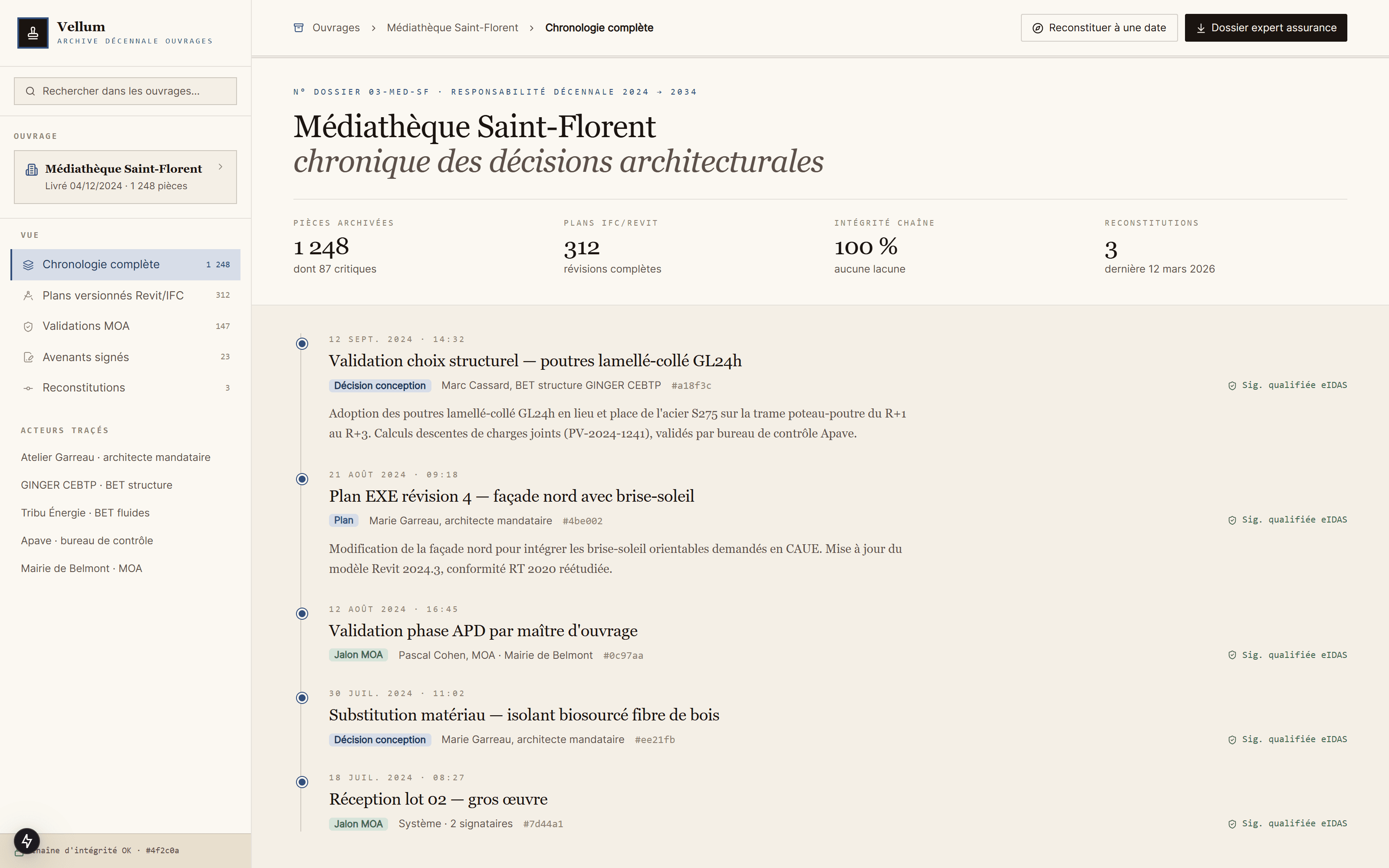
Every design decision (structural choice, plan modification, amendment validation) is kept for 10 years in tamper-proof form. In case of damage 8 years after delivery, exact reconstruction of architectural decisions and their authors, evidence admissible to insurers and courts.
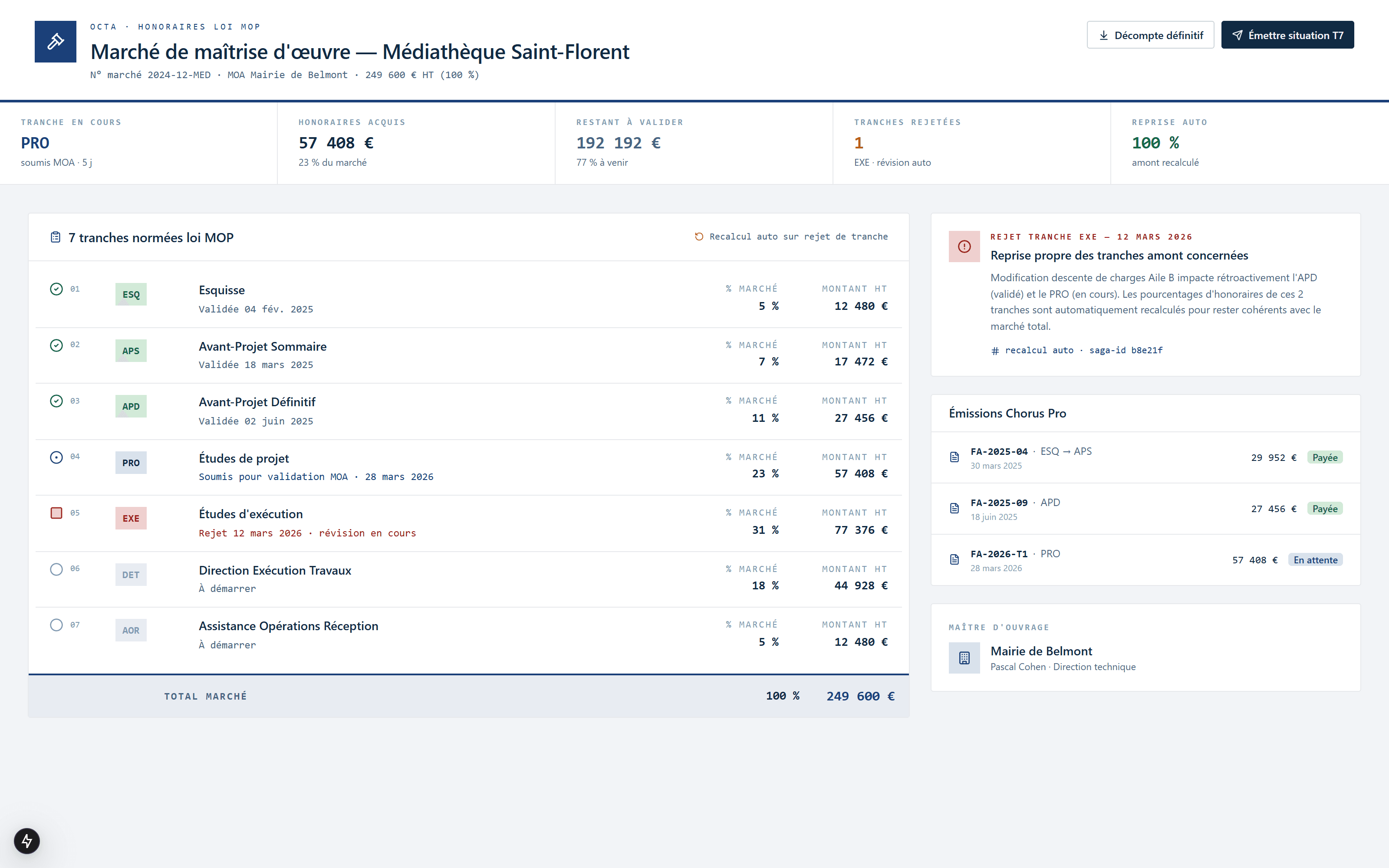
Full cycle on the 7 MOP-law stages (ESQ → APS → APD → PRO → EXE → DET → AOR) with project-owner validation at each milestone. If a stage is rejected, automatic recalculation of fees over the entire contract and clean rollback of all upstream stages concerned.
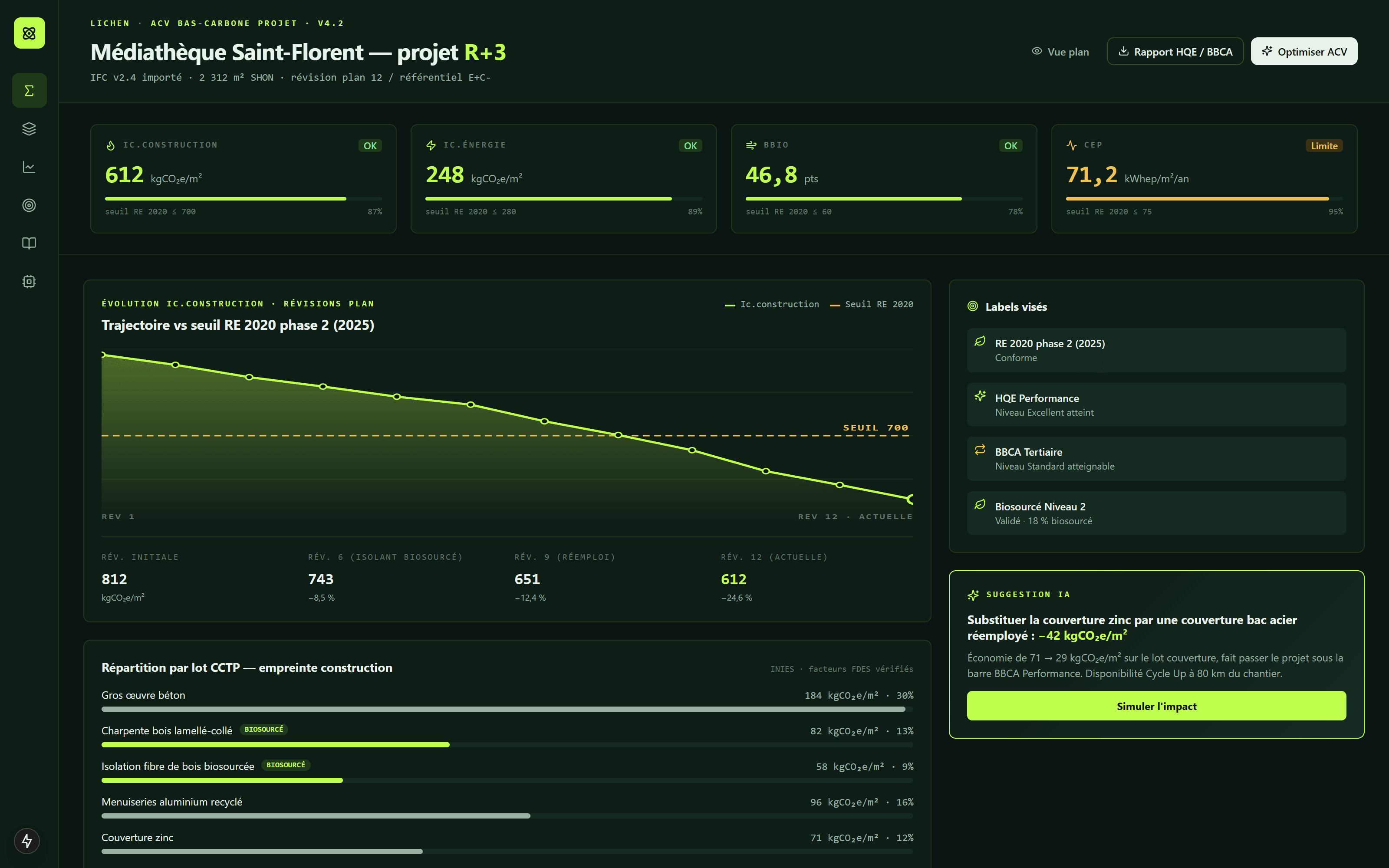
Automatic LCA computation per E+C- framework, Bbio / Cep / Ic.energy / Ic.construction indicators traced on each plan revision, comparison with RE 2020 phase-2 thresholds (2025) and HQE Performance / BBCA / Bio-sourced labels. Compliance report replayable at any project version, auditable by the inspection office.
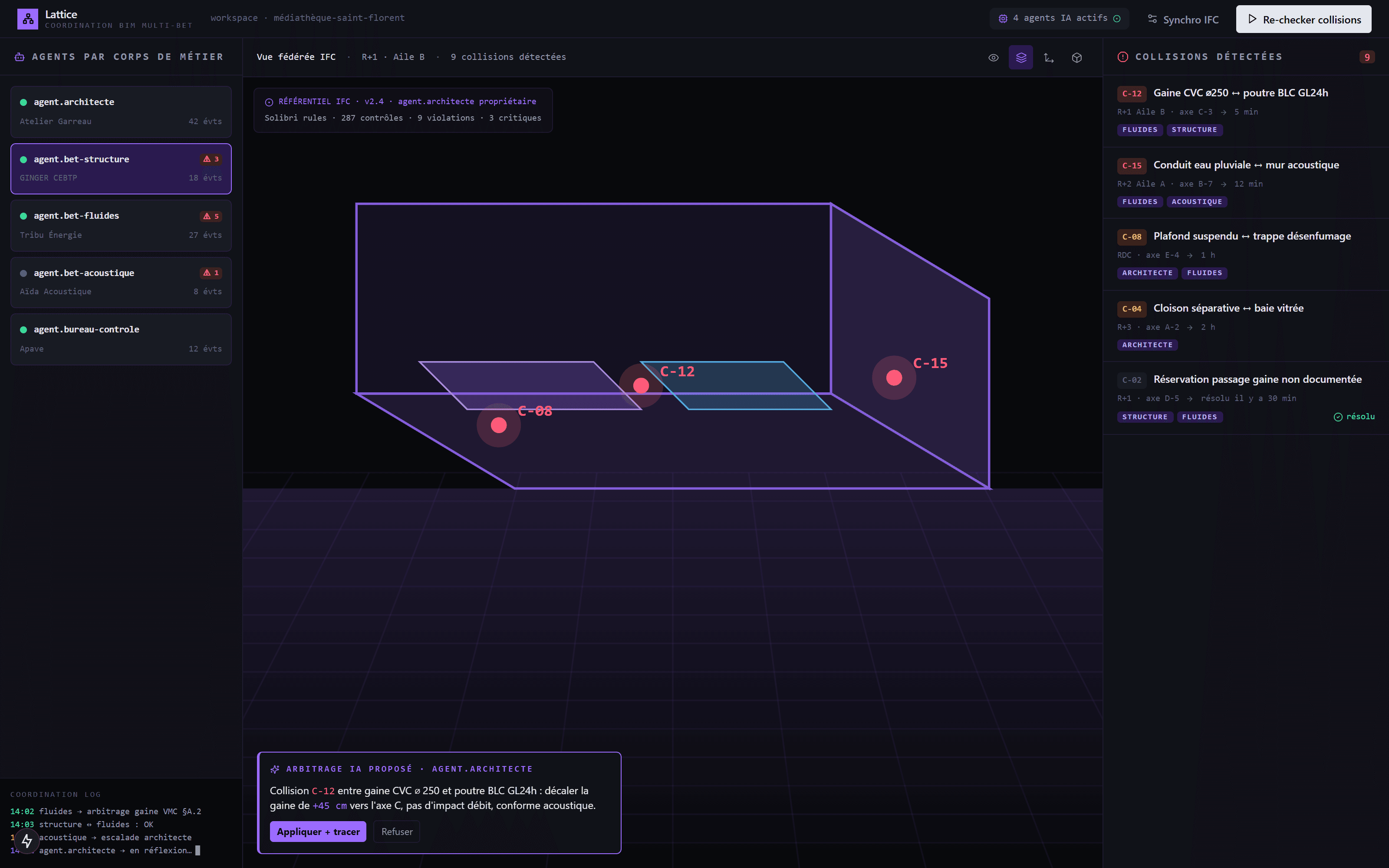
An AI assistant per profession (architect, structure, MEP, acoustics) that syncs IFC models, automatically detects collisions, escalates to those responsible and keeps the trace of every arbitration between trades.
For everything else (CRM, portals, scheduling, billing), we ship a custom application, on your design system and with your existing integrations.
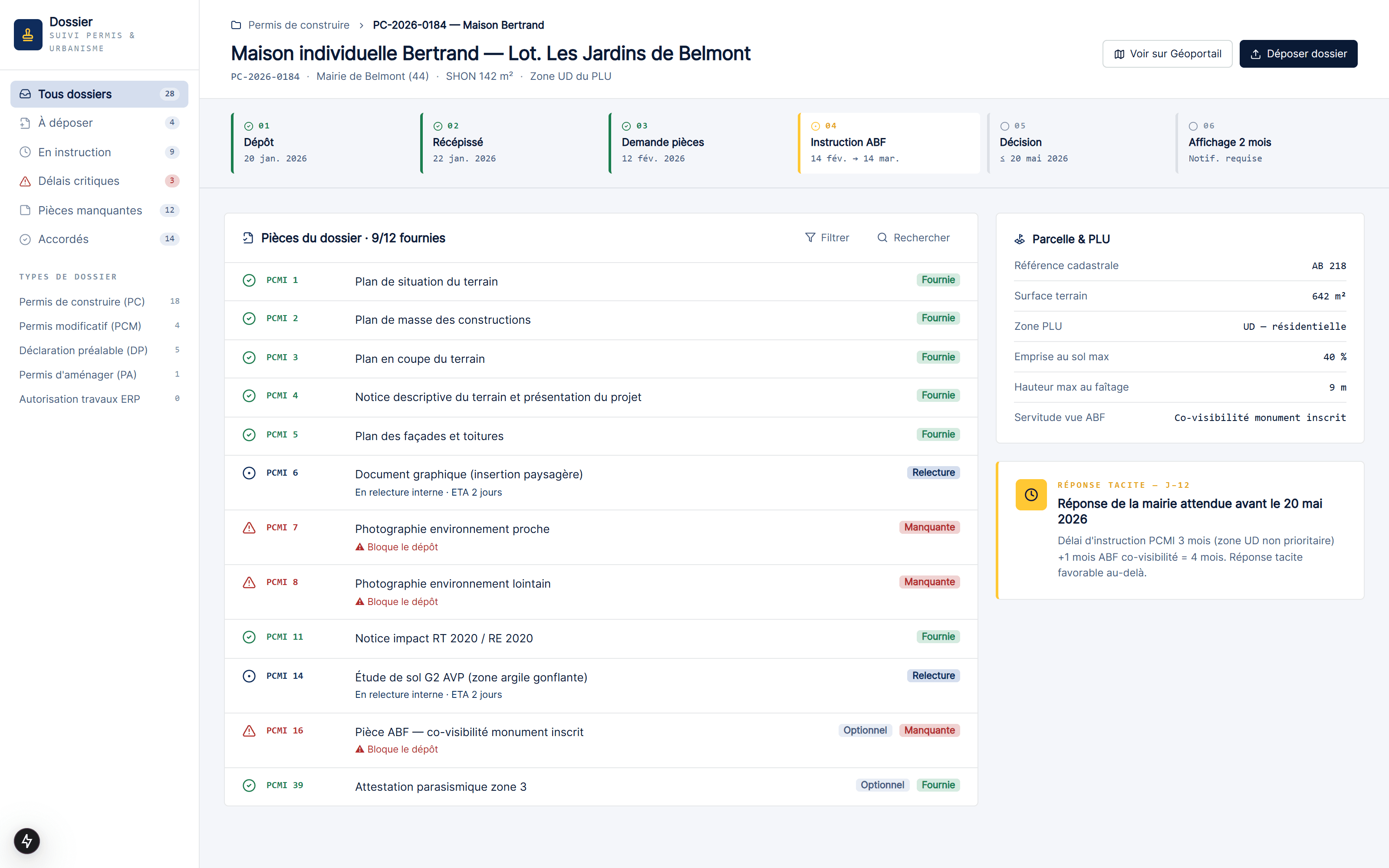
Per-permit-type document checklist (PC, PCM, DP, AT, ERP), instruction-time tracking, alerts before tacit responses. Link to municipal services where available.
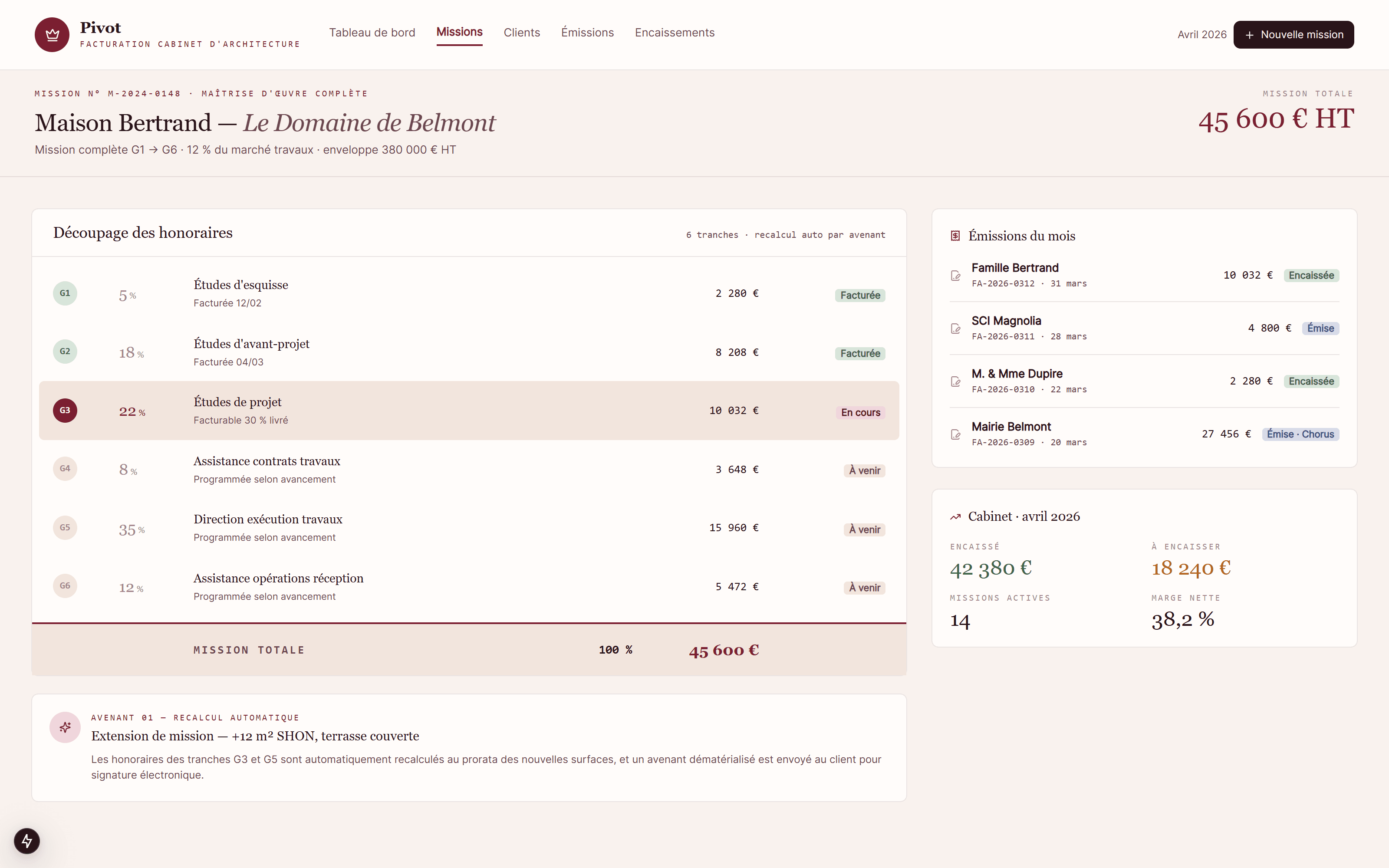
Project-management mission split into stages (ESQ, APS, APD, PRO, EXE, DET, AOR), per-stage percentage automatically computed, invoices generated on customer validation. Amendments with mission recalculation.
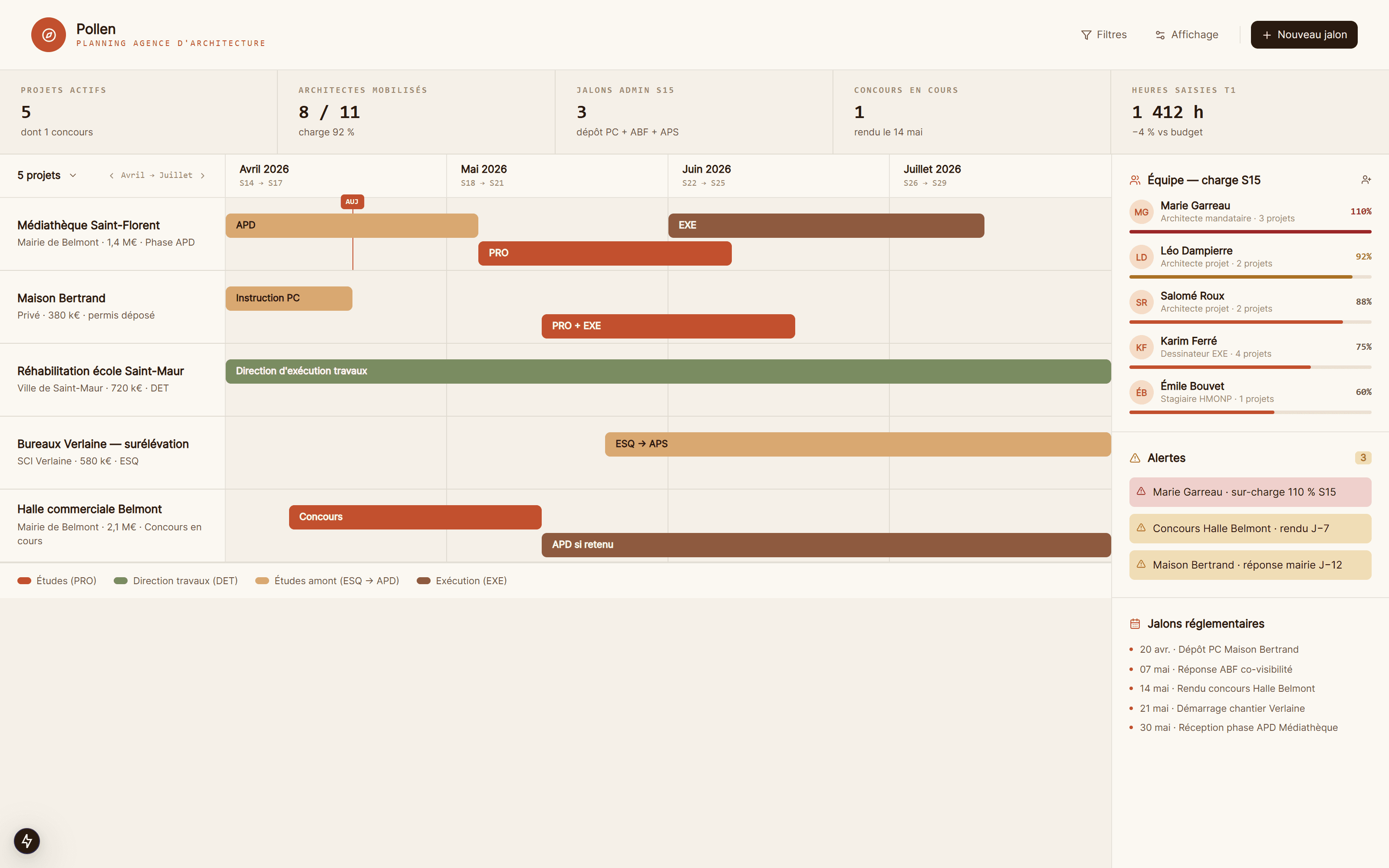
Per-project Gantt view, per-architect team workload, regulatory milestones (permit submission, site start, delivery). Detection of resource overcommitments.
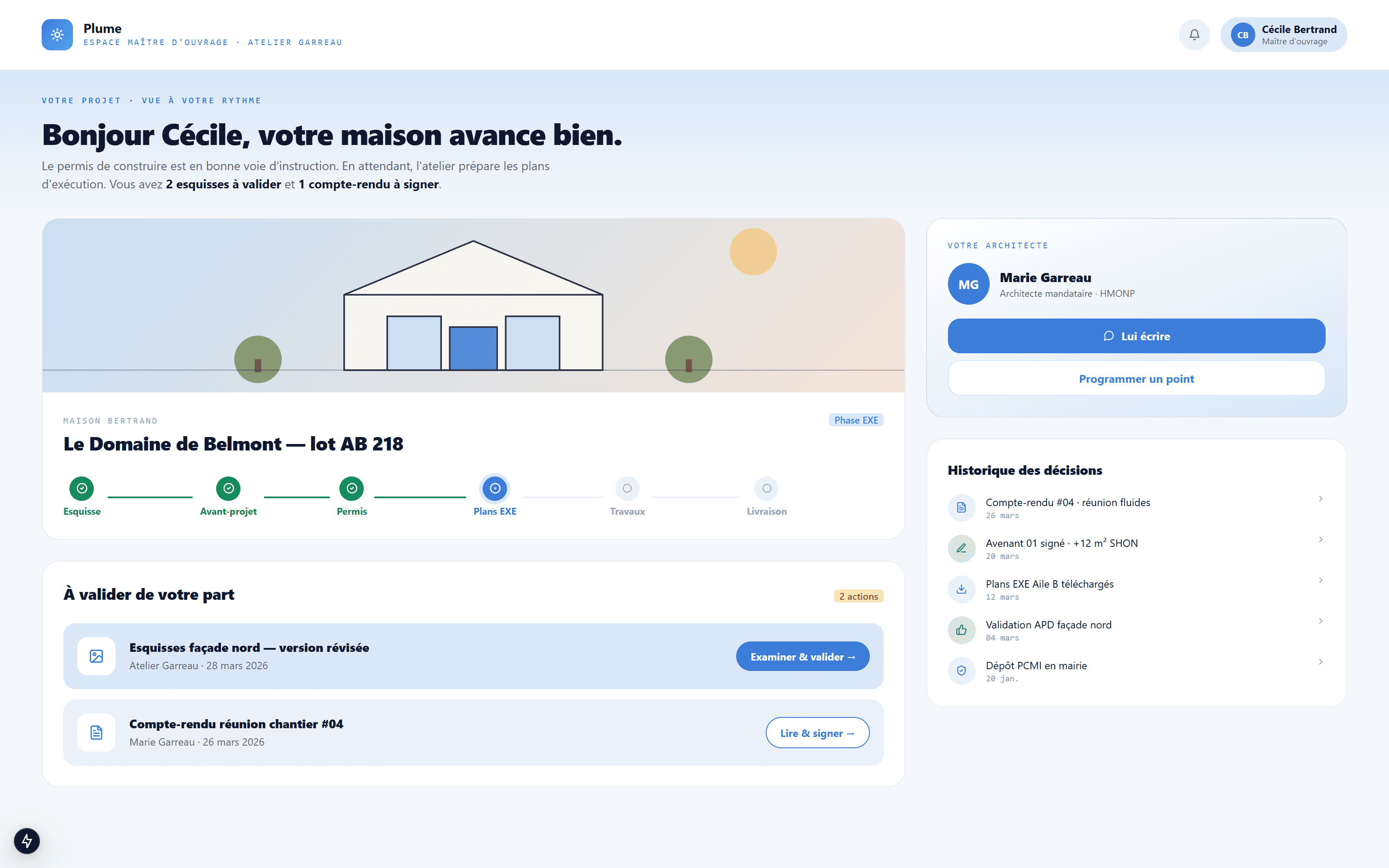
Your clients consult progress, validate sketches and plans, sign site reports. Timestamped electronic signature for legal archiving.
Business compliance and key integrations are not options, they are prerequisites built in from the start.
Building permits, zoning, ABF, public-building rules
Public project ownership, normalized fee stages
Roll registration, ethics, insurance
Thermal and environmental regulation
Unified technical documents and technical opinions
Decennial liability, plan retention
Mixed firms (accounting + audit, accounting + advisory, accounting + legal) draw from several industries. Here are those that share the most challenges.
Réglementations, virages business, sous-domaines en mutation : ce que notre pôle veille publie sur le secteur Architecture.
With Ic Construction and Ic Énergie thresholds tightening in 2025 and 2028, carbon becomes a site-plan constraint as much as light or structure.
Les réglementations qui pèsent sur les choix logiciels (appliquées, partielles, ou imminentes), décryptées par notre pôle veille.
Responsabilité Élargie du Producteur, Produits et Matériaux de Construction du Bâtiment
Filière REP qui finance la collecte et la valorisation des déchets de chantier. Sanctions actives en 2026 pour les artisans et entreprises BTP.
Réglementation Environnementale 2020
Réglementation française des bâtiments neufs : performance énergétique + carbone. Seuils Ic Construction durcis en 2025 et 2028.
30 minutes to scope the perimeter, identify Revit/ArchiCAD/Sage links and price the project.